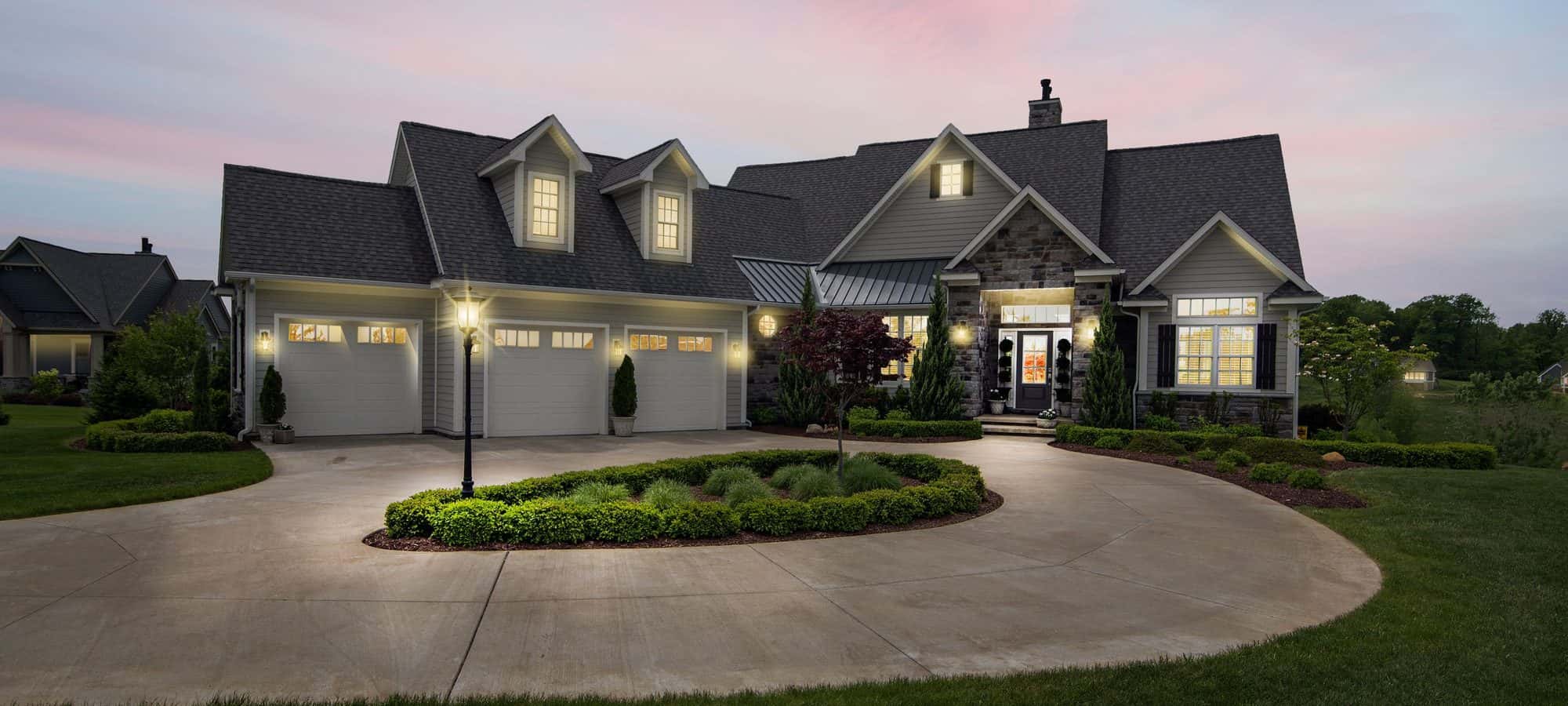
Landscape Lighting
Low-voltage landscape and architectural lighting
Warm, low-glare LED lighting that makes a garden usable after dark, designed at night, on your property, before you buy it.
We demo it before you buy it
A night-time mock-up on your property with temporary fixtures. You stand in the yard and see it before anything is trenched.
Brass and copper, not plastic
Solid brass fixtures develop a patina and outlive the house. The composite fixtures at the big-box store fail in three to five years in our sun.
Voltage designed, not guessed
We calculate voltage drop per run and use multi-tap transformers, so the last fixture on the line is as bright as the first in year five.
You spend forty thousand dollars on a landscape and then, for eight months of the year, you cannot see it after six o'clock. Lighting is the cheapest square-foot improvement in the whole trade, and it is the one that changes how often the space actually gets used.
Done badly it is worse than nothing: a row of identical path lights down a walkway like an airport runway, or a floodlight glaring straight into the neighbour's bedroom. Good lighting hides the fixture and shows the tree.
The techniques that actually matter
Almost every good lighting plan is four or five techniques used with restraint. The goal is contrast, not coverage. The eye reads a garden by the difference between lit and unlit.
- Uplighting: a fixture at the base of a tree or wall washing upward. The single highest-impact technique, especially on mature oaks, olives and palms.
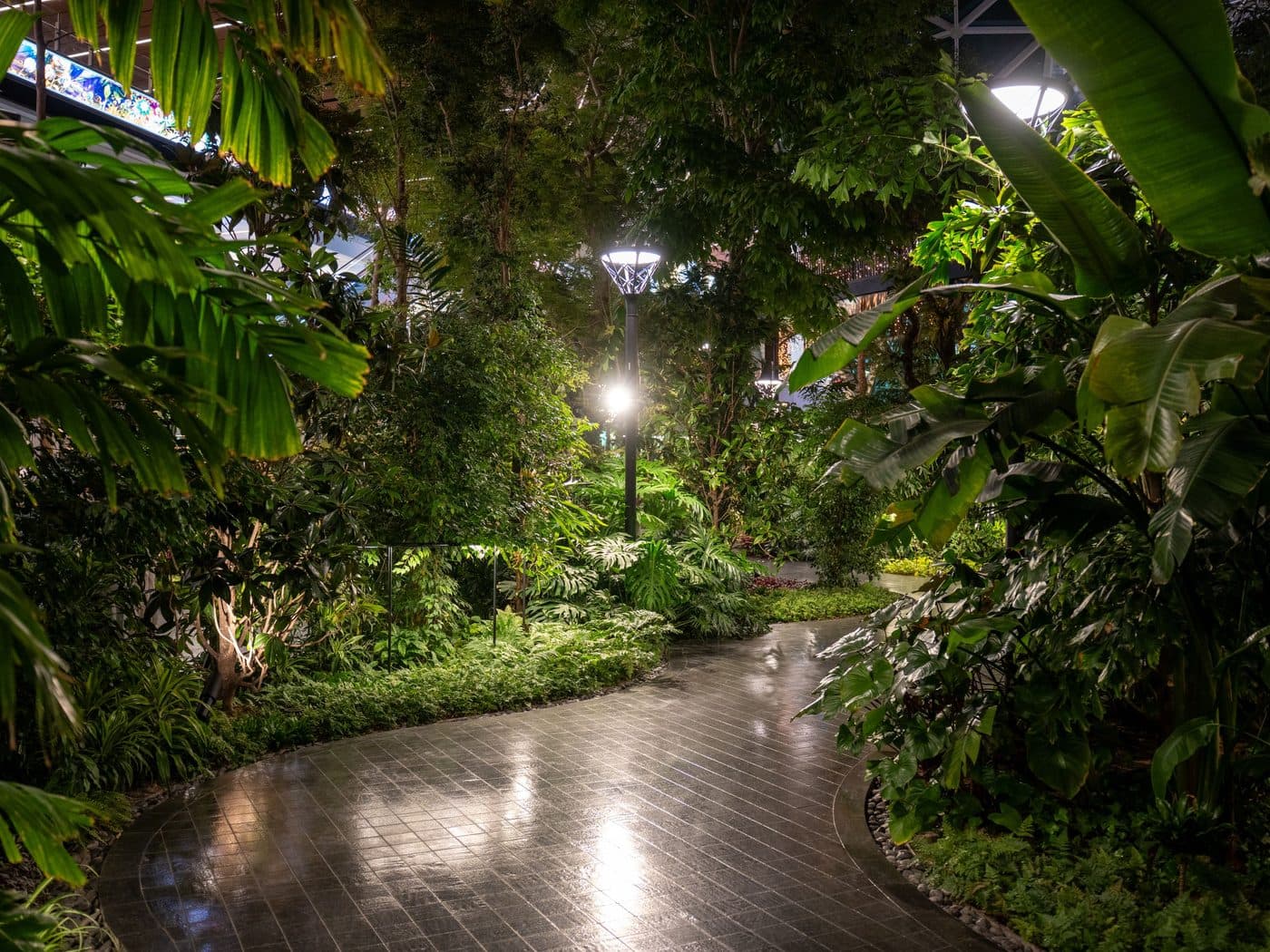
- Downlighting or moonlighting: fixtures mounted high in a tree or under an eave, casting dappled light down through the branches. The most natural-looking effect there is, and the hardest to spot the source of.
- Path lighting: used sparingly, offset and staggered rather than in symmetrical pairs, and only where there is a genuine trip hazard or a change in level.
- Grazing and wall washing: a fixture close to a stone or stucco wall raking light across it to bring out texture.
- Step and seat-wall lighting: recessed hardscape lights that make a level change safe without a visible source.
Why low-voltage, and why brass
Low-voltage means 12 volts stepped down from a transformer, which makes it safe to work with, safe around irrigation and pets, and possible to modify later without an electrician. The line-voltage systems installed here in the eighties are a maintenance liability by comparison.
Fixture material is where most of the long-term difference lies. Solid brass and copper oxidise into a stable patina and keep working for decades. Cast aluminium is acceptable inland but corrodes quickly in Carlsbad, Encinitas or anywhere within a couple of miles of the ocean. The composite and thin-stamped-metal fixtures sold in kits typically fail in three to five years under our UV load, and the whole fixture is disposable rather than serviceable.
We use integrated LED at 2700K, a warm white. Anything cooler than 3000K reads blue at night and makes planting look grey and clinical.
Getting the electrical design right
The most common failure in landscape lighting is voltage drop. A 12-volt run loses voltage over distance, and an LED fixture at the end of a long undersized cable run gets dim and shifts colour. It usually shows up two or three years in, after the installer has stopped answering the phone.
We calculate the load per run, size the cable accordingly, and use multi-tap transformers so each run can be fed at 12, 13, 14 or 15 volts to land every fixture inside its operating window. Runs are hub-wired rather than daisy-chained wherever the layout allows. Transformers are stainless, mounted at least a foot off grade, on a photocell or an astronomic timer so the schedule tracks sunset through the year instead of drifting.
Being a good neighbour about it
Light trespass is the fastest way to annoy the people next door, and San Diego County has meaningful dark-sky considerations given the Palomar and Mount Laguna observatories east of us.
The practical rules are simple: shield every source so the bulb is never visible from a standing position or from the street, aim away from property lines, keep fixture wattage as low as the effect allows, and put everything on a timer that shuts down at a reasonable hour rather than burning until dawn. A well-lit garden at night uses far less light than people expect.
How it works
Our lighting process
- 01
Night walkthrough
We come out after dark, walk the property with you and identify the trees, walls and level changes worth lighting.
- 02
On-site demo
Temporary fixtures set up on your property so you can see the actual effect before committing to a layout.
- 03
Plan and fixture schedule
A layout with fixture types, beam spreads, transformer sizing and cable runs, plus a fixed price.
- 04
Install and aim
Cable trenched below mulch depth, fixtures set, then a second visit after dark to aim and adjust every fixture.
Questions
Lighting FAQs
The questions we get asked most often about landscape lighting in North County.
Will landscape lighting raise my electricity bill much?
Barely. A typical 20-fixture LED system draws about 120 watts total. Running six hours a night, that is roughly 22 kilowatt-hours a month, a few dollars at SDG&E rates, comparable to leaving a couple of light bulbs on. The old halogen systems these replace drew ten times as much.
Can you add fixtures to a system I already have?
Usually. First we check the transformer's remaining capacity and the condition of the existing cable runs and connections. Two things commonly block it: the transformer is already at capacity, or the original installer used undersized cable, in which case adding load makes the existing fixtures dim. We will tell you which before quoting.
Are solar lights a reasonable alternative?
Honestly, no, not for anything you care about. Solar path lights have small panels, small batteries and low output, they dim through the night, they fade badly after a season or two of our UV, and they are useless in the marine layer months when they need the light most. They are fine as a temporary marker. They are not a lighting system.
How long do the LEDs last?
Quality integrated LED modules are rated around 40,000 to 50,000 hours, which at six hours a night is roughly twenty years. In practice the fixture body and the wire connections determine real lifespan, which is the argument for solid brass and properly sealed connections rather than the cheapest fixture that hits the same lumen number.
Does lighting actually help with security?
Well-designed lighting does; floodlights often do not. A bright, glaring floodlight creates deep shadow next to it and blinds anyone looking toward it. Even, low-level illumination across the approach to the house, with no dark pockets and no visible glare, removes hiding places and makes the property look occupied. It also happens to be what looks good.
Often paired with
Related services
Hardscape & Outdoor Living
Patios, walkways, retaining walls, outdoor kitchens and fire features, built on a base that will still be flat in fifteen years.
Learn moreLandscape Design & Installation
Measured plans, a real budget before you commit, and one licensed crew that stays on your property from grading through the final plant.
Learn moreLandscape Maintenance
The same crew every visit, pruning done to the plant rather than to the hedge trimmer, and your irrigation checked every time.
Learn more
Free on-site estimate
Ready to talk about lighting?
Free on-site walkthrough, a line-item estimate, and an honest answer about whether you need all of it.