Drought-Tolerant & Native Landscaping
Drought-tolerant and California native landscaping
Turf removal done properly, a California native and Mediterranean plant palette, and the rebate paperwork filed for you.
Roughly 70–80% less water
A converted front yard on a smart controller typically drops from around 40 gallons per square foot per year to under 10. Most Vista customers see it in the first summer bill.
We file the rebate paperwork
Pre-inspection photos, plant counts, square footage documentation and the post-install submittal. You sign; we file.
Native plants, not just succulents
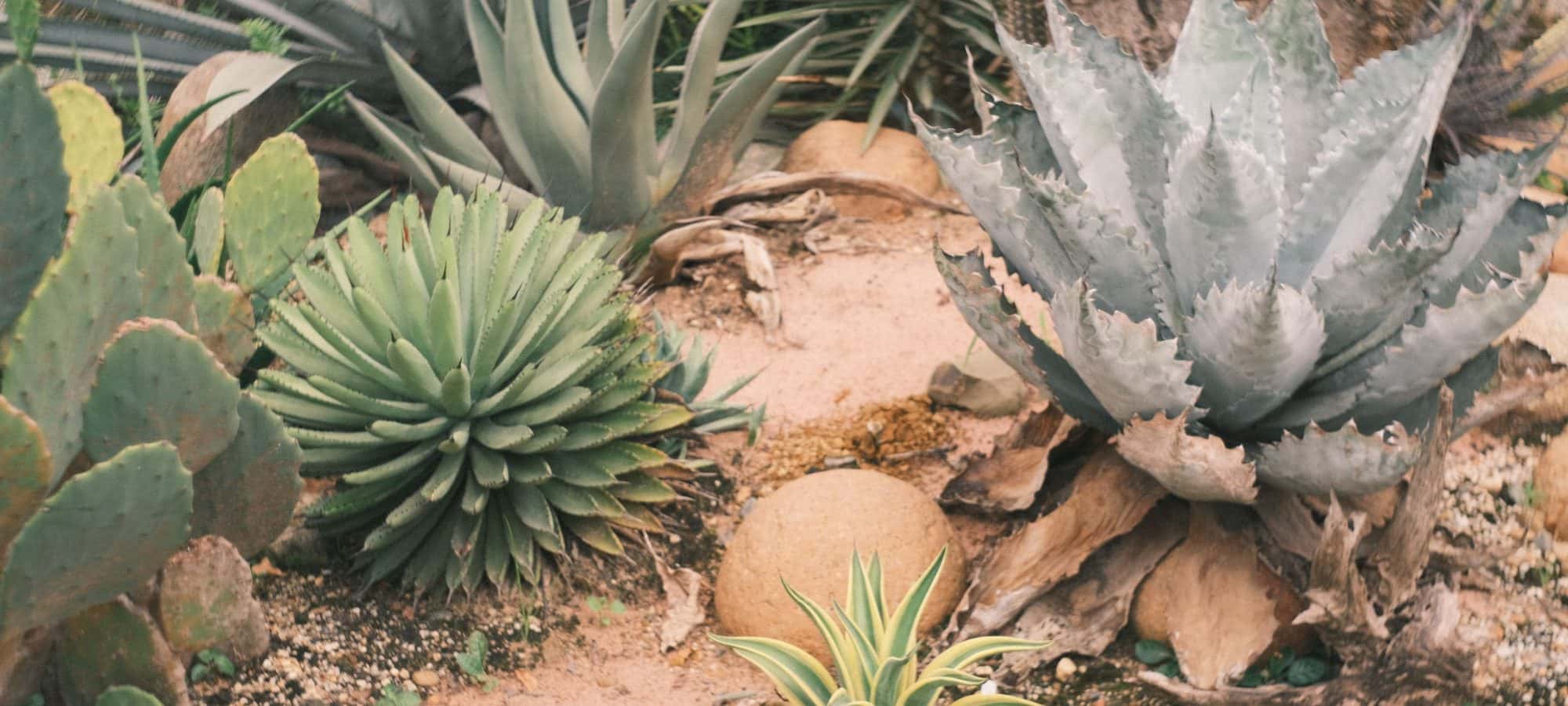
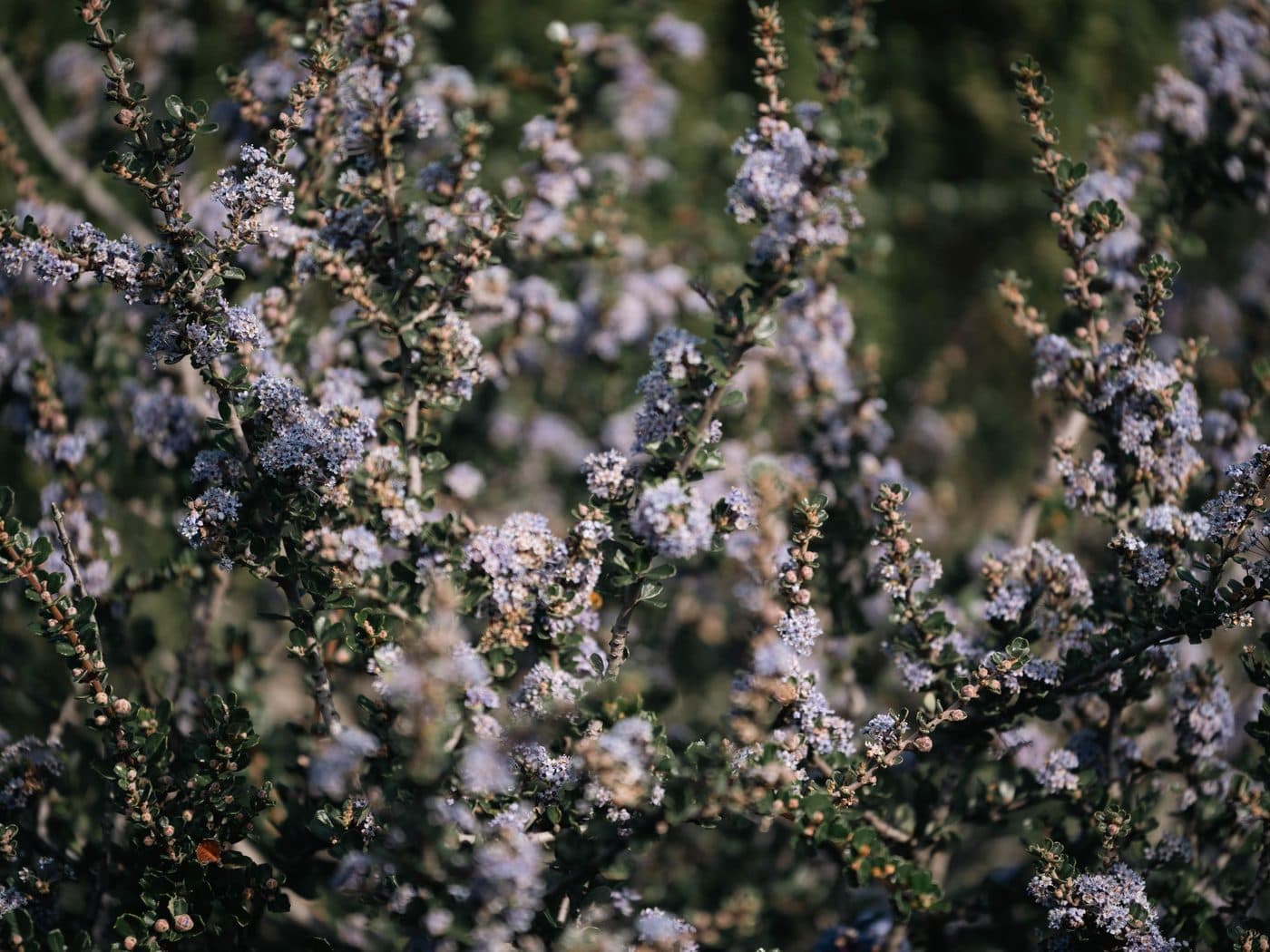
Cleveland sage, ceanothus, manzanita, toyon and buckwheat give you spring bloom, evergreen structure and pollinators. Succulents are an accent, not the whole plan.
Nobody wants a gravel pit. That is the fear, and it is a fair one, because a lot of turf conversions in San Diego County in the last fifteen years produced exactly that: a field of crushed rock, three sad agaves and a boulder that looks like it was dropped from a helicopter.
A drought-tolerant landscape done properly is a garden. It has layers, seasons, colour and shade. It just happens to run on roughly a fifth of the water your lawn does, and once it is three years old it mostly takes care of itself.
Why a lawn is so expensive here
Cool-season turf in inland North County wants somewhere around 45 to 55 inches of water a year. Vista gets about 13 inches of rain, almost all of it between December and March. Everything else comes out of a hose, at Metropolitan Water District import rates, during the months when evapotranspiration is highest.
That is the actual math behind the water bill. It is not that you are watering carelessly. It is that you are growing a plant from a wetter climate through a five-month rainless summer, and physics charges you for the difference.
What we replace it with
The palette that works here is broader than most people expect. We build around four groups:
- California natives: Cleveland sage, ceanothus, manzanita, toyon, coffeeberry, deergrass and California buckwheat. Evergreen structure, a big spring bloom, and they support local pollinators and birds.
- Mediterranean climate-adapted: westringia, rockrose, rosemary, germander, olive, lavender and grevillea. Tough, long-blooming, and forgiving of clay soil.
- Structural succulents and agaves: used as accents and focal points, not as ground cover.
- Ornamental grasses and low groundcover: muhly, deergrass and dymondia to soften edges and hold slopes without irrigation once established.
Turf removal, done so it does not come back
Bermuda is the reason most conversions fail. It regenerates from rhizomes six inches down and it will come through a new bed for years if the removal was superficial.
For Bermuda and kikuyu we sheet-mulch or solarize before we plant: six to eight weeks under clear plastic through the summer heat, or a cardboard and mulch layer over a longer window. For fescue, mechanical removal to a proper depth is usually enough. We tell you which one your lawn needs and how long it adds to the schedule, because the shortcut here is what produces a weed problem you live with forever.
Then the soil gets amended and the grade gets set to hold water on site rather than sheet it into the street. Small swales, basins around trees and a proper mulch depth of three inches do more for plant survival than any irrigation schedule.
Rebates, and what they are actually worth
Turf replacement rebates in our area are administered through the SoCal Water$mart program, funded by the Metropolitan Water District and often topped up by your local retail agency. For most of our customers that is the Vista Irrigation District, Carlsbad Municipal Water District, or the City of Oceanside.
The per-square-foot amount and the total funding change with each cycle, so we do not quote a number until we have pulled the current terms for your specific address and agency. What we can tell you is that the programs are consistently oversubscribed, they require a pre-inspection with photos before you remove a single square foot, and applications submitted after the work has started are rejected. We handle the sequencing and the paperwork so that does not happen to you.
Fire-wise planting on the wildland edge
If you are in Bonsall, on the east side of Vista, or anywhere backing onto open chaparral, defensible space is part of the design rather than an afterthought. That means no woody or resinous plants inside the first five feet of the structure, hardscape or gravel in that zone, irrigated and well-spaced planting from five to thirty feet, and thinning beyond that.
Drought-tolerant and fire-wise are not the same thing. Some of the toughest dry-climate plants are also the most flammable. We select for both, and we keep the plan consistent with what CAL FIRE and the Vista Fire Department will want to see.
Year one, year two, year three
Be realistic about the timeline and you will be happy with the result. Year one looks sparse and needs regular establishment water. Year two it fills, blooms properly and the irrigation comes down hard. Year three it closes in, the mulch stops showing, and you are watering deeply once every ten to fourteen days in summer.
The gardens that fail are the ones planted at full spacing for instant effect. They look wonderful for eighteen months and then crowd, shade each other out and need half of it removed. We plant to mature size and ask you to be patient for one season.
How it works
Our drought-tolerant & native process
- 01
Water audit and walkthrough
We measure the turf area, check your current controller and zones, and pull your agency's current rebate terms.
- 02
Rebate pre-inspection
Photos and documentation submitted before any removal. Nothing comes out until the application is acknowledged.
- 03
Plan and plant selection
A planting plan sized at maturity, with a spring-through-fall bloom sequence so there is always something happening.
- 04
Removal and soil prep
Solarizing or sheet-mulching where the grass demands it, then grading, amendment and drip conversion.
- 05
Plant, mulch, and file
Three inches of mulch, controller programmed for establishment, and the post-install rebate submittal filed for you.
Questions
Drought-Tolerant & Native FAQs
The questions we get asked most often about drought-tolerant & native landscaping in North County.
Will my yard just look like rocks and gravel?
Not if it is designed. The gravel-pit look comes from under-planting, using rock as the primary surface instead of as a path or a mulch. We plant densely enough that by year three the planting is the surface and the mulch barely shows. Expect layered shrubs, ornamental grasses, a spring bloom from sages and ceanothus, and one or two specimen trees for shade.
How much water will I actually save?
Most of our Vista conversions come in around 70 to 80 percent lower on the converted area once the plants are established, usually by the second summer. A typical 1,500 square foot front lawn on spray heads uses roughly 60,000 gallons a year here. The same area planted in climate-adapted material on drip generally runs 12,000 to 18,000. Your first summer will be higher than that while roots establish.
Do you handle the rebate application?
Yes, and the order matters. Turf replacement rebates require a pre-inspection with photographs before any grass is removed, and applications filed after work has begun are rejected outright. We submit the pre-inspection, document square footage and plant counts, and file the post-install package. You sign the forms; we do the rest.
Is decomposed granite or bark mulch better?
Different jobs. Bark or shredded wood mulch goes on planting beds, where it holds moisture, moderates soil temperature and breaks down into the soil, which clay soils here need. Decomposed granite is a surfacing material for paths and seating areas. Using DG across a whole planting bed bakes the root zone and gives you nothing back. Most of our plans use both.
What if my HOA requires a lawn?
California Civil Code section 4735 prevents a homeowners association from banning low-water landscaping or from fining you for a brown lawn during a declared drought. Associations can still enforce reasonable design standards, so the practical route is a proper plan set rather than a fight. We prepare the submittal in the format your HOA expects and have taken plans through most of the major Vista, Shadowridge and San Marcos associations.
Do native plants attract more pests or snakes?
You will see more pollinators, more birds and more lizards, which is largely the point. Rodents and snakes are drawn to cover and food, not to native plants specifically. An overgrown ivy bank or a woodpile is far more attractive to them than a well-spaced native bed. Keeping the first few feet around the house clear handles nearly all of it.
Often paired with
Related services
Irrigation & Drainage
Leak diagnosis, drip conversion, smart controllers, and drainage that keeps winter storms out of your foundation.
Learn moreLandscape Design & Installation
Measured plans, a real budget before you commit, and one licensed crew that stays on your property from grading through the final plant.
Learn moreLandscape Maintenance
The same crew every visit, pruning done to the plant rather than to the hedge trimmer, and your irrigation checked every time.
Learn more
Free on-site estimate
Ready to talk about drought-tolerant & native?
Free on-site walkthrough, a line-item estimate, and an honest answer about whether you need all of it.