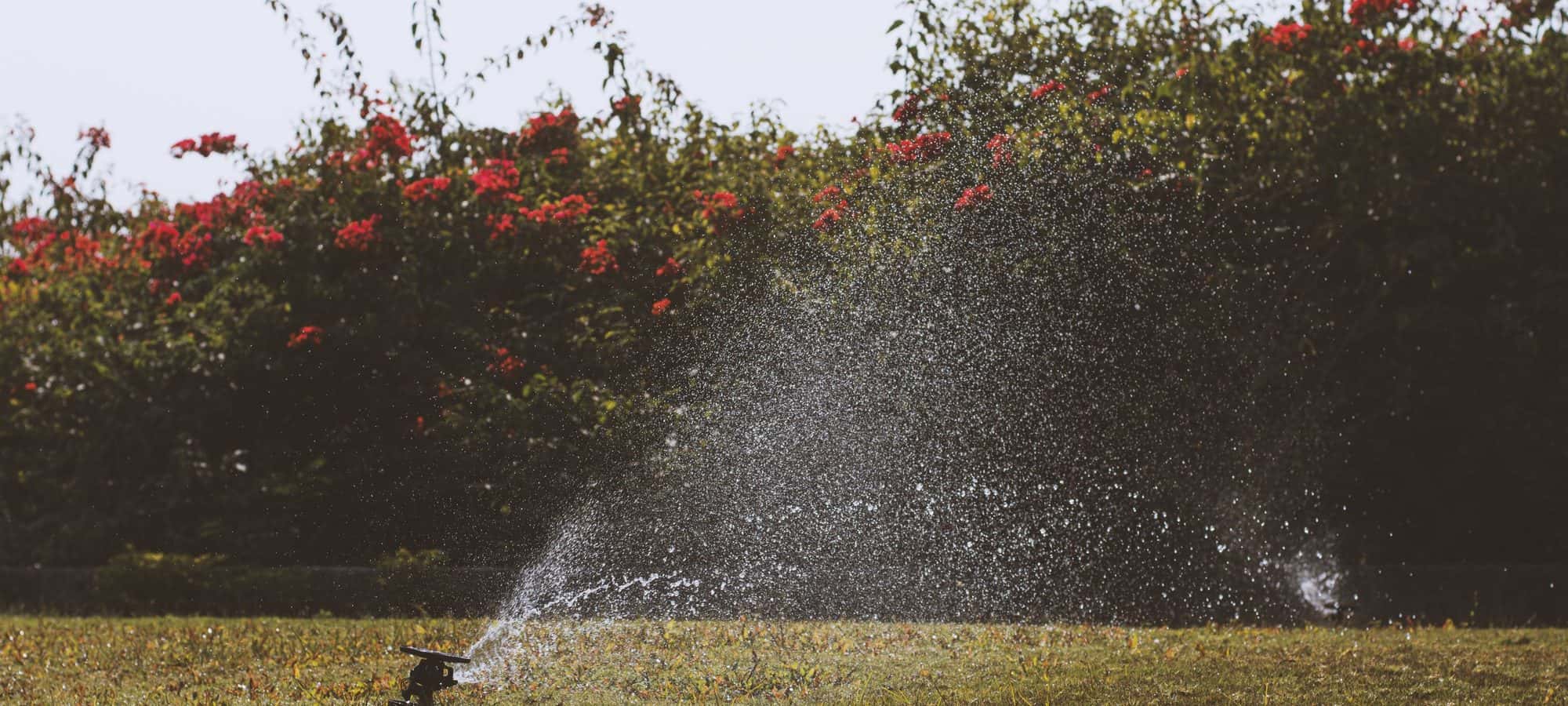
Irrigation & Drainage
Irrigation repair, drip conversion and yard drainage
Leak diagnosis, drip conversion, smart controllers, and drainage that keeps winter storms out of your foundation.
We locate before we dig
Wire tracing, valve locating and pressure testing. We find the fault, then dig one hole instead of six.
QWEL-certified water management
Our irrigation lead is QWEL-certified through the county programme. Schedules are built from evapotranspiration data, not guesswork.
Drainage designed for a real storm
Sized for an actual one-inch-per-hour event, with a real outlet. A pipe that dead-ends in gravel is not drainage.
Irrigation is the least visible system on your property and the most expensive one to get wrong. A single stuck valve can run four hundred dollars through the meter before anyone notices, and a broken lateral under a slope will quietly saturate the soil until the retaining wall above it starts to lean.
We work on irrigation two ways: fixing what is broken now, and retrofitting systems so they stop breaking and stop overwatering. Both start with actually finding the problem rather than replacing parts until the symptom goes away.
The five things that drive a high water bill
When someone calls us about a bill that has doubled, it is almost always one of these, and four of the five are cheap to fix.
- A valve that is not closing fully, usually debris on the diaphragm. The zone weeps continuously and you never see it run.
- Broken or sunken heads spraying the sidewalk, the fence or a wall. Ten to twenty percent losses are typical and invisible during the day, because most systems run at 4 a.m.
- Overspray and mismatched precipitation rates: rotors and spray heads on the same zone, so one half of the lawn is drowned to keep the other half alive.
- A controller still running a January schedule in October, or a rain sensor that failed years ago.
- Excessive pressure. Above about 60 psi at the head, spray atomises into mist and drifts away. Pressure-regulating heads fix this for a few dollars each and typically cut zone usage by fifteen percent.
Retrofits worth doing
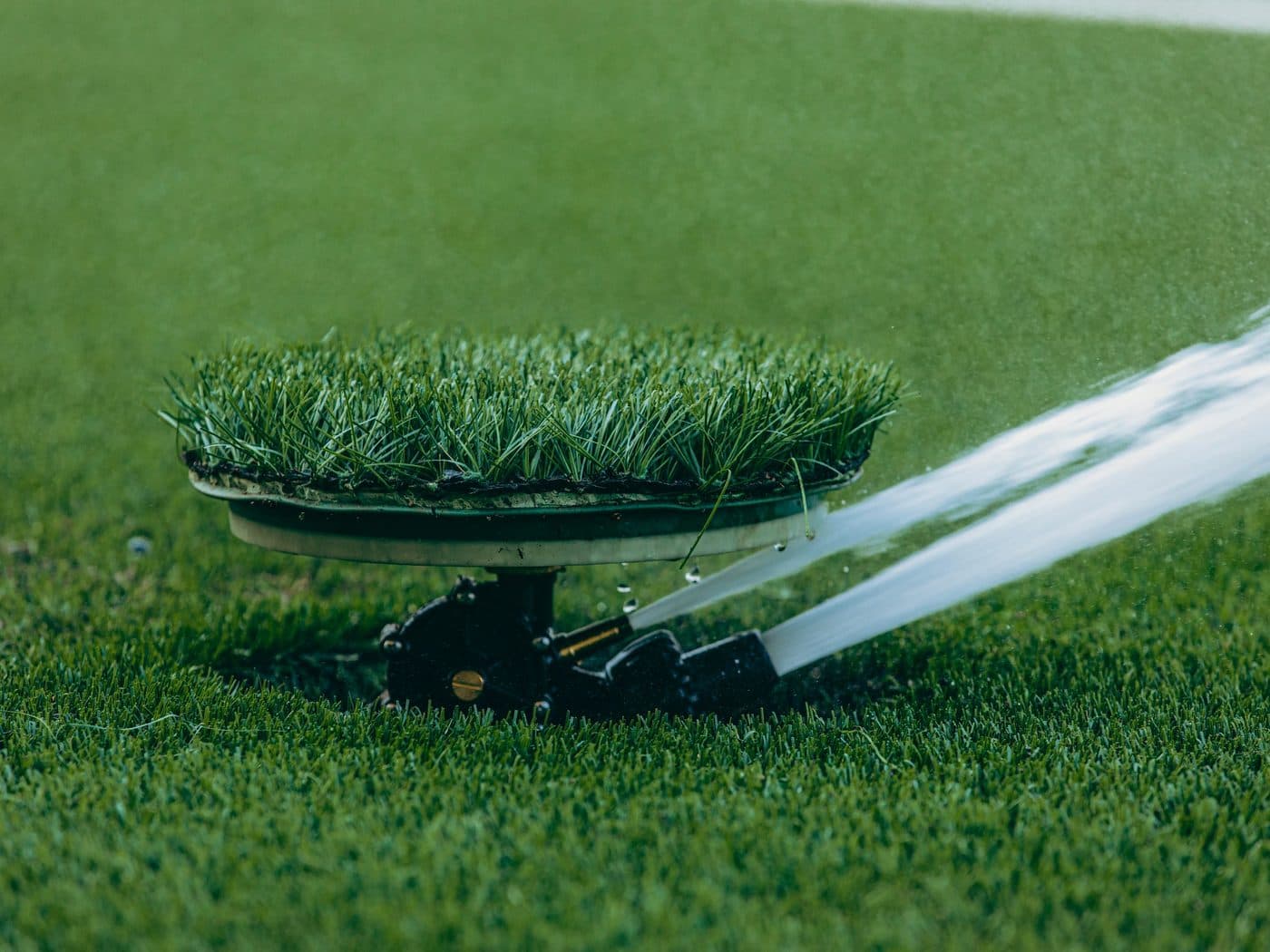
Converting spray heads to high-efficiency rotary nozzles is the single best value retrofit for a lawn. They apply water at a much lower precipitation rate in a thick stream instead of a mist, so almost nothing is lost to wind and evaporation and far less runs off clay soil. It is a nozzle swap, not a re-pipe.
Converting beds to drip is the other one. Shrub beds on spray heads waste water on mulch and leaves and encourage weed germination between plants. Inline drip tubing or point-source emitters put water at the root zone. Every drip zone needs a filter and a pressure regulator. Skipping those is why drip retrofits clog.
A weather-based smart controller ties it together. Rachio, Hunter Hydrawise and Rain Bird ESP-TM2 with a wireless weather link all work well. They adjust run times daily against local evapotranspiration and skip cycles when it rains. Real-world savings are usually fifteen to thirty percent, more if the old schedule was set once and never touched. Many local agencies offer a rebate on the controller itself.
Watering rules in North County
Most retail agencies in our area, including the Vista Irrigation District, Carlsbad MWD and the City of Oceanside, have permanent water waste rules independent of any drought declaration. In general terms that means no runoff onto hardscape or into the gutter, no irrigating within 48 hours of measurable rain, and restrictions on the time of day you can run spray irrigation.
Rules and any active day-of-week limits vary by agency and change with conditions, so check your provider's current page. What is consistent everywhere is the runoff rule, and the practical fix for it is cycle-and-soak: instead of one twelve-minute run, three four-minute runs thirty minutes apart. Clay soil here has a very low infiltration rate, and anything past the first four or five minutes is running down the driveway.
Drainage: where the water actually goes
We get 13 inches of rain a year and we get a lot of it in a handful of atmospheric river events. A yard that drains fine in a drizzle can put four inches of standing water against a slab in a real storm.
- French drains: perforated pipe in washed rock wrapped in filter fabric, for intercepting subsurface water and slope seepage. Fabric orientation matters; done wrong it silts up in two seasons.
- Catch basins and solid pipe: for surface water at low points, tied together and daylighted at the curb or the property line.
- Channel drains: at garage thresholds, patio edges and anywhere a slope runs at a doorway.
- Downspout tie-ins: the highest-value drainage work there is. Roof water dumped at the foundation is the cause of most of the wet-crawlspace and settling problems we see.
- Dry creek beds and swales: surface conveyance that looks like landscape rather than infrastructure, and handles far more volume than most people expect.
What a diagnostic visit looks like
Ninety minutes, flat rate, and you get a written findings sheet whether or not you hire us for the repair. We run every zone, map and photograph the head layout, pressure test at the point of connection and at the far head of each zone, locate buried valves with a wire tracer, and check the controller programme against current evapotranspiration for your zip code. If there is a leak, we find it before we quote the repair.
How it works
Our irrigation & drainage process
- 01
Zone-by-zone diagnostic
Every zone run and observed, pressure tested at both ends, heads mapped and photographed.
- 02
Written findings
A plain-English sheet with what is broken, what is wasteful, and what can wait. Yours to keep either way.
- 03
Repair or retrofit
Valve and lateral repairs same-visit where we can. Larger retrofits scheduled with a fixed price.
- 04
Programme and verify
Controller set with cycle-and-soak, seasonal adjust enabled, and a catch-cup check on lawn zones to confirm uniformity.
Questions
Irrigation & Drainage FAQs
The questions we get asked most often about irrigation & drainage in North County.
My water bill doubled and I cannot see anything wrong. What is it?
Nine times out of ten it is a valve not fully closing, and you cannot see it because the zone weeps at low volume into a bed rather than spraying visibly. Shut off every irrigation zone at the controller, then watch the low-flow indicator on your water meter for fifteen minutes. If it moves, you have a leak on the system. That test takes five minutes and tells us where to start.
Is a smart controller worth it?
Usually yes, but the savings come from the schedule rather than the hardware. A smart controller adjusts daily against local evapotranspiration and skips cycles after rain, which typically saves fifteen to thirty percent against a schedule set in spring and left alone. If your current schedule is already adjusted seasonally, the gain is smaller. Several local agencies rebate part of the cost, which usually brings payback inside two years.
Drip or spray for my planting beds?
Drip, without much argument. Spray heads in a shrub bed water mulch, leaves and the gaps between plants, lose a good share to evaporation, and germinate weed seed across the whole bed surface. Inline drip tubing puts water at the root zone at a rate clay soil can actually absorb. Lawn is the exception, and that still wants overhead, ideally high-efficiency rotary nozzles.
Why do I have standing water after every storm?
Usually one of three things: negative or flat grade near the structure, downspouts discharging straight onto soil at the foundation, or a hardpan layer in clay soil that stops infiltration a foot down. The fix is rarely a single French drain. We shoot elevations, find the low points and the outlet options, and design a system with somewhere for the water to actually go. A pipe that ends in a gravel pit just relocates the puddle.
Can you repair a system you did not install?
That is most of our irrigation work. Older Vista systems are often a patchwork of three or four eras of parts with no as-built drawings and valves buried under mulch. We locate valves with a wire tracer, map what is actually there, and give you a documented system you can maintain.
Often paired with
Related services
Drought-Tolerant & Native Landscaping
Turf removal done properly, a California native and Mediterranean plant palette, and the rebate paperwork filed for you.
Learn moreLandscape Maintenance
The same crew every visit, pruning done to the plant rather than to the hedge trimmer, and your irrigation checked every time.
Learn moreLandscape Design & Installation
Measured plans, a real budget before you commit, and one licensed crew that stays on your property from grading through the final plant.
Learn more
Free on-site estimate
Ready to talk about irrigation & drainage?
Free on-site walkthrough, a line-item estimate, and an honest answer about whether you need all of it.